Column Yachtrevue
Column Yachtrevue, February 20, 2026
Innovation & Sustainability
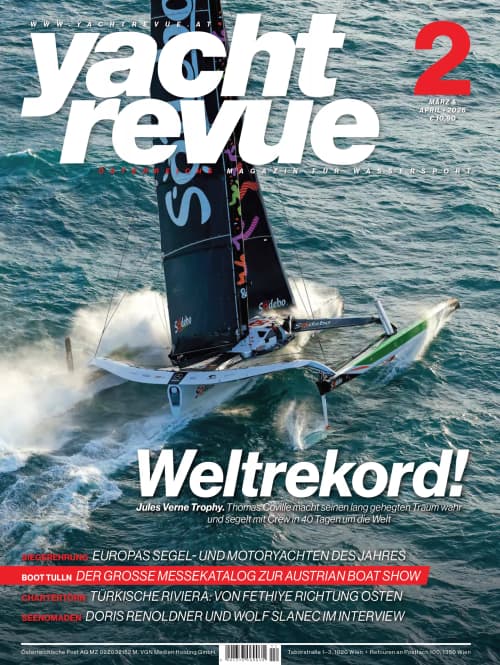
Sails on cargo ships are nothing new. They provide assistance in windy conditions and can significantly reduce costs. You can read more about this in this issue.

Alois Bauer
Innovation Deployment Expert, Founder
Back to the Roots
Can you still remember when the world was a better place and trade was conducted by sailing ships? No? Fortunately, neither can I. First, steamships sped up trade; later, ships powered by heavy fuel oil and diesel made it cheaper. That brought us a great deal of prosperity.
Was everything really worse in the past? No, because every type of propulsion has its own strengths and weaknesses. Sailing ships use locally available and free energy, but are dependent on the weather. Ships running on diesel or alternative fuels can sail regardless of the weather, but they put a strain on budgets and the environment.
We sailors are familiar with the ‘calm-weather propeller’, a system that combines wind and engine power. Our goal, however, remains sailing. Cargo ships have different objectives. They must reach their ports within a specific timeframe, and only diesel engines or alternative propulsion systems can guarantee this. Emerging modern sailing systems can support this primary propulsion and, when wind is available, reduce energy requirements – in some cases significantly.
Current projects demonstrate how this combination works today. Cargo ships such as the Pyxis Ocean rely on wingsails inspired by aircraft wings. In favourable winds, they save up to 30% on fuel. For the Pyxis Ocean, this equates to up to 11 tonnes of heavy fuel oil or 5,500 euros per day, which translates to a payback period of 3–4 years. In addition to fixed sails, Flettner rotors and kite systems are also used. These either require a lot of deck space and interfere with loading and unloading, or they are limited in terms of wind strength and direction.
This brings us to the latest innovation: Aeroforce’s inflatable wingsails. Like the fixed systems, the profiles are controlled by AI, but can be reefed or completely furled when passing under bridges and in port. And the best thing for us: even leisure yachts such as the MODX 70 are already being tested.
Is this rediscovered wind power fit for the future, or do these systems simply introduce unnecessary complexity? Write to us: hello@alba-innovations.com
Let's Deploy Your Innovation
Inspired to Innovate?
Shape your future with us. Our services show you how we can work together to turn your ideas into reality.